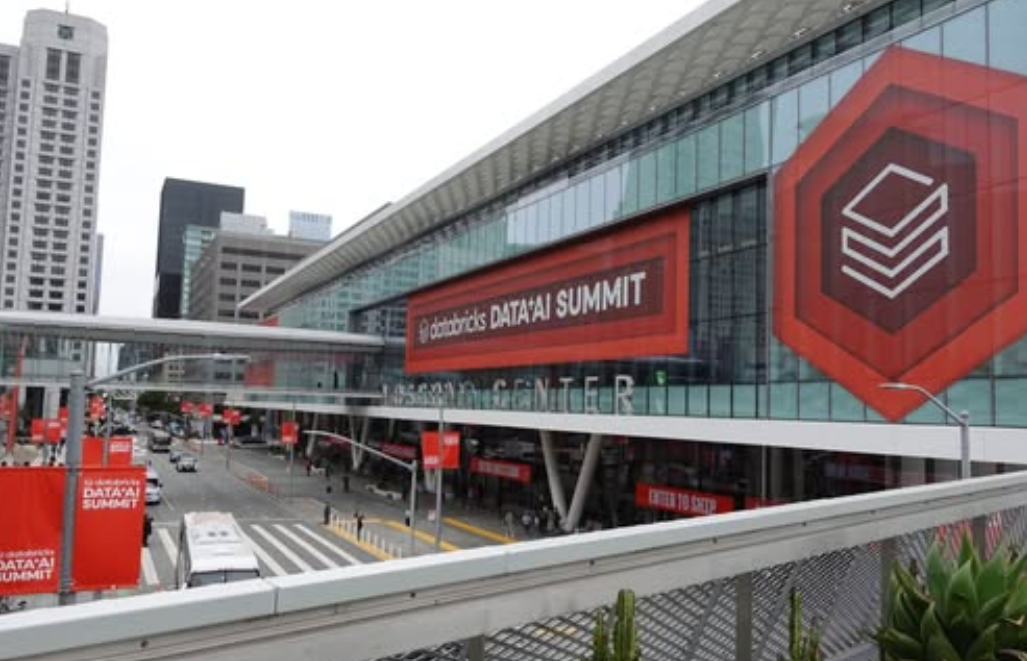
Every year, Databricks Data + AI Summit sets the agenda for where enterprise data and AI is headed — and 2026 is no exception. 30,000 data and AI professionals on the floor. Tens of thousands more watching virtually from 150-plus countries. Over 800 sessions across four days. If you needed a signal that enterprise AI has moved from hype to hard infrastructure, Databricks Data + AI Summit 2026 (June 15–18, San Francisco) is it.
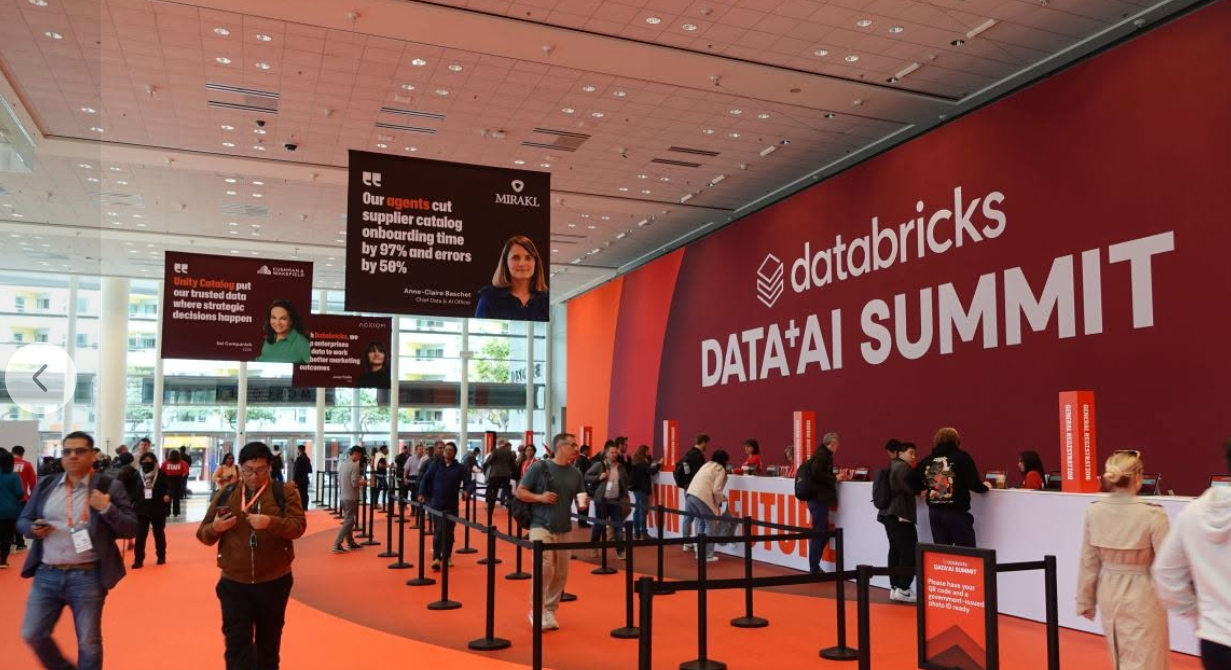
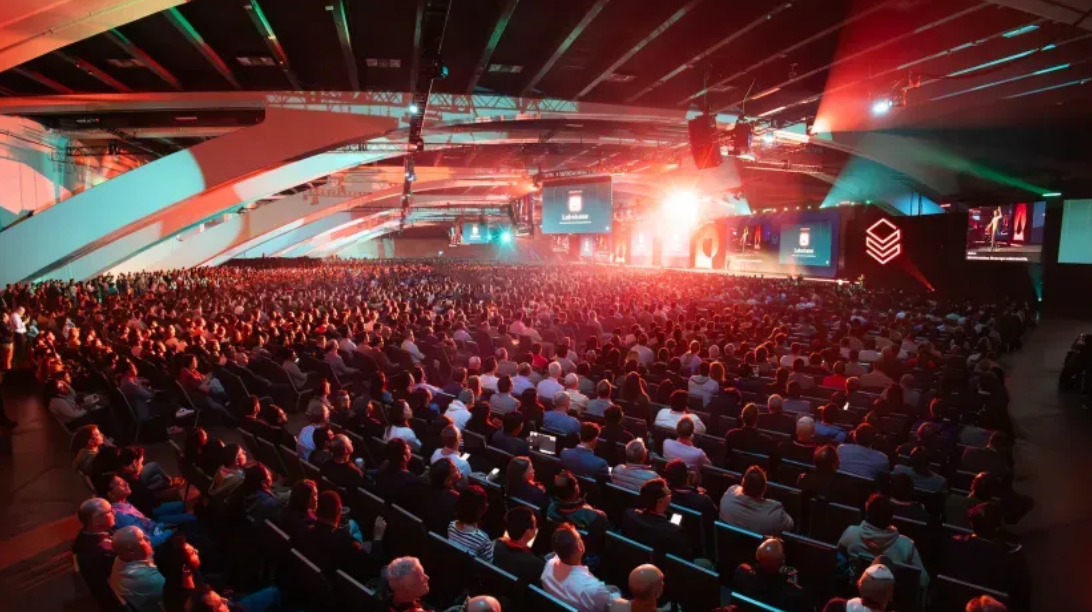
Ali Ghodsi opens the keynote, with guest speakers including executives from PepsiCo, Mastercard, and AstraZeneca – enterprises that are past the pilot stage and focused on running AI in production. Before the sessions even kicked off, Databricks presented more than 65 partner awards, recognizing standout contributions from consulting and SI partners like Accenture and Deloitte, alongside ISVs including Anthropic, NVIDIA, and Salesforce.
This year’s summit is shaping up around how Databricks is building the infrastructure for production-scale agentic AI – not just experimentation.
Here’s what you should expect, and what it means for your organization.
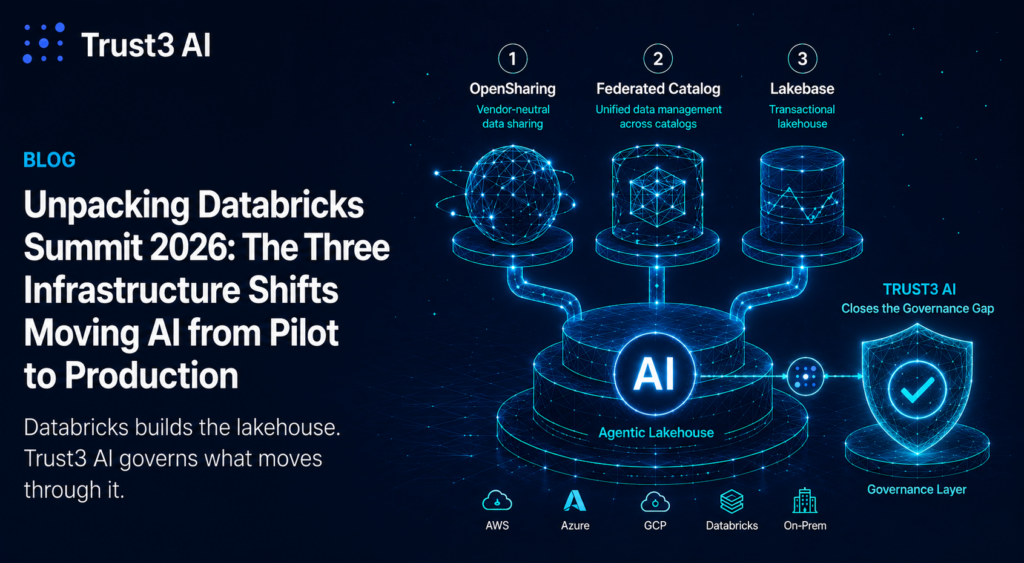
OpenSharing: A Universal Protocol for AI Assets
The most strategically significant announcement heading into Summit is OpenSharing – an open, vendor-neutral protocol for securely sharing data and AI assets across organizations, platforms, and clouds.
Contributed by Databricks and now hosted by the Linux Foundation as a top-level project, OpenSharing evolves the widely adopted Delta Sharing protocol well beyond tables and files. It extends sharing to cover AI-specific artifacts (agent skills, AI models, and unstructured data) without requiring recipients to use any particular platform.
What you should expect from this: if your organization works with external partners, operates across multiple clouds, or consumes third-party AI capabilities, OpenSharing gives you a standardized, secure way to exchange those assets without custom integrations or vendor lock-in. Think of it as the foundation for an interoperable AI economy. One where sharing a trained model or an agent skill is as routine as sharing a CSV file used to be.
The Linux Foundation’s stewardship matters here. It signals that this isn’t a Databricks-proprietary play; it’s a genuine push toward open standards at a moment when the industry badly needs them.
Federated Catalog: Unified Governance Without Moving Data
The second major area to watch is catalog federation within Unity Catalog. This capability lets you bring external catalogs, including AWS Glue and Snowflake, under Unity Catalog governance without physically moving or copying data.
What that means in practice: your data teams can query Databricks-managed tables alongside data registered in AWS Glue, and Unity Catalog enforces access controls, lineage, and auditing across all of it.
For enterprises running hybrid or multi-cloud architectures, which is most of you, this is a meaningful step forward. Federated Catalog lets you meet your data where it lives while maintaining centralized policy enforcement through Unity Catalog.
What you should expect: fewer data movement projects, faster time-to-insight for cross-platform analytics.
Lakebase: Serverless Postgres Built for Agentic Workloads
The third announcement is Lakebase, Databricks’ fully managed, serverless PostgreSQL database integrated directly into the lakehouse platform.
This one is aimed squarely at the operational layer of agentic AI. AI agents don’t just read from data lakes. They write state, update records, and trigger actions in real time. Standard lakehouse architectures were optimized for analytical workloads, not the low-latency, high-frequency transactional writes that agents demand. Lakebase fills that gap.
According to Databricks, Lakebase delivers up to 5x faster throughput for write-heavy OLTP workloads compared to standard Postgres configurations. This is a meaningful improvement for agent-driven applications at scale. It also supports instant branching and automatic scaling, which matters when you’re running multiple agent workflows simultaneously.
What you should expect: if you’re building or planning to deploy AI agents that interact with operational data (not just analytical data) Lakebase gives you a purpose-built transactional layer that stays inside the Databricks environment, reducing integration complexity and latency.
The Still Governance Gap Remains
Databricks Summit 2026 makes one thing clear: enterprise AI is moving from experimentation to execution. OpenSharing, Federated Catalog, and Lakebase provide the infrastructure needed to scale AI across data, clouds, and teams. But infrastructure is not governance.
But knowing where your data lives and how it is shared does not tell you what your agents are doing with it. Organizations still need visibility into which agents are running, what data they are accessing, whether they are operating within their intended scope, and how quickly they are consuming resources.
That is where Trust3 AI comes in. Databricks builds the lakehouse. Trust3 AI governs what moves through it. Trust3 AI automatically discovers agents across any framework or cloud, traces every decision and data access in real time, and enforces policies before risk escalates. Together, Databricks and Trust3 AI help enterprises move from AI pilots to production with the visibility, governance, and control required to scale responsibly. Every agent. Every action. Every data interaction. Learn more at trust3.ai/demo.