What is a RAG System?
Retrieval-Augmented Generation (RAG) is a key technique used in modern Generative AI systems. It combines a pre-trained language model with real-time data retrieval to improve answer accuracy and relevance.
Businesses use RAG to connect AI models with live data sources. These sources can include enterprise systems, documents, and databases. Instead of relying only on training data, the model fetches relevant information at query time and uses it to generate better responses.
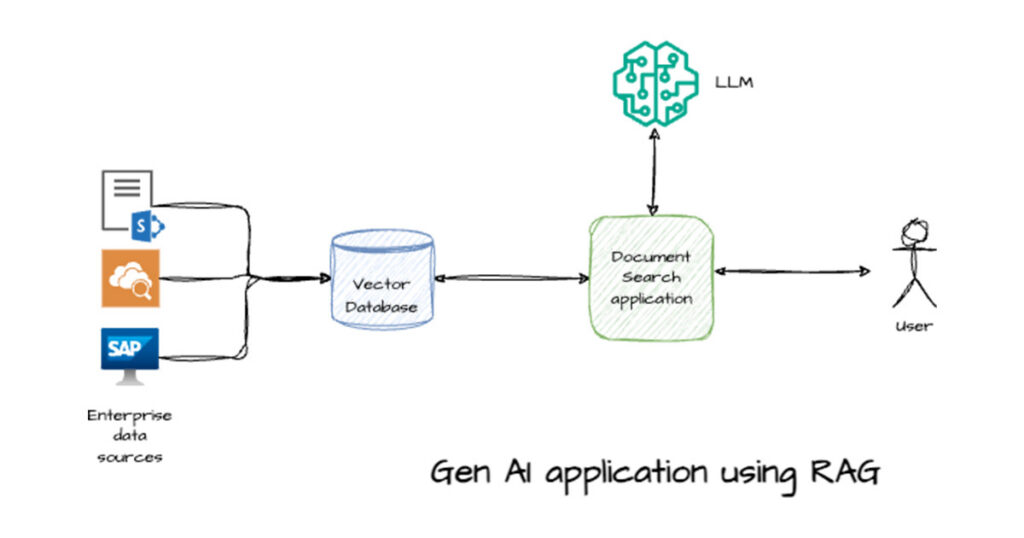
In a typical RAG pipeline, the system first receives a user query. It then searches a vector database or external sources. After that, it sends the retrieved data to an LLM, which generates a final response.
For example, a company may build a document search system. It stores enterprise data from SharePoint, SAP, and other tools in a vector database. When a user asks a question, the system finds relevant documents and the LLM summarizes them.

RAG improves AI output, but it also creates data access challenges. Organizations must ensure users only see data they are allowed to access. This becomes harder when AI systems combine multiple data sources.
RAG systems often connect to Confluence, SharePoint, databases, and support tools. Each source has its own access rules. Managing these rules across systems is complex and risky.
Key Challenges in Data Access Control for RAG Systems
1. Dynamic Data Access in Real-Time Retrieval
RAG systems query external data in real time. This makes access control harder than in traditional AI systems.
For example, an employee may ask for customer insights. The system should allow access to customer data. However, it must block access to financial or HR records.
The system must check user identity and permissions at query time. Many vector databases support role-based access, but they do not fully understand user context or data sensitivity.
2. Data Leakage in AI Outputs
RAG systems can expose sensitive data in AI-generated answers. This happens when the model includes restricted or confidential information in its response.
For example, the model may summarize private reports or internal emails. The user may then see information they should not access.
Challenge: Prevent sensitive data from appearing in AI responses.
3. Fine-Grained Permissions Across Data Sources
RAG systems use many data sources. These include structured databases, document systems like SharePoint, and external APIs.
Each system uses different access rules. Managing consistent permissions across all sources is difficult. Users also need different levels of access based on their roles.
4. Training Data and Access Control
RAG systems may use proprietary data for fine-tuning or embedding. Organizations must ensure only approved data enters the training process.
This step is critical for security and compliance.
5. Real-Time Data Auditing
Regulated industries must track all data access. This includes GDPR and HIPAA compliance requirements.
RAG systems make this harder because data flows through multiple steps. Organizations must log every query, retrieval, and AI response with full context.
6. Insider Threats and Misconfigurations
Internal users can also create security risks. Mistakes like wrong access settings can expose sensitive data.
Administrators and developers may also have elevated access. This increases the risk of accidental or intentional data misuse.
How PAIG Helps Overcome These Challenges
PAIG (Privacera AI Governance) helps organizations secure RAG systems with strong governance controls:
- Context-Aware Access Control: Checks user identity, context, and permissions at query time.
- Output Filtering: Removes or redacts sensitive data from AI responses.
- Unified Policy Layer: Applies consistent rules across all data sources.
- Full Audit Trails: Tracks all data access and AI interactions for compliance.
- Multi-Layer Enforcement: Applies policies during prompt, retrieval, and response stages.
Conclusion
RAG systems make AI more powerful by connecting it with real-time data. However, they also increase security and compliance risks.
Organizations must control how data is accessed, retrieved, and used by AI models. A governance layer like PAIG helps enforce these controls.
With proper governance, companies can use RAG safely in production while protecting sensitive data.