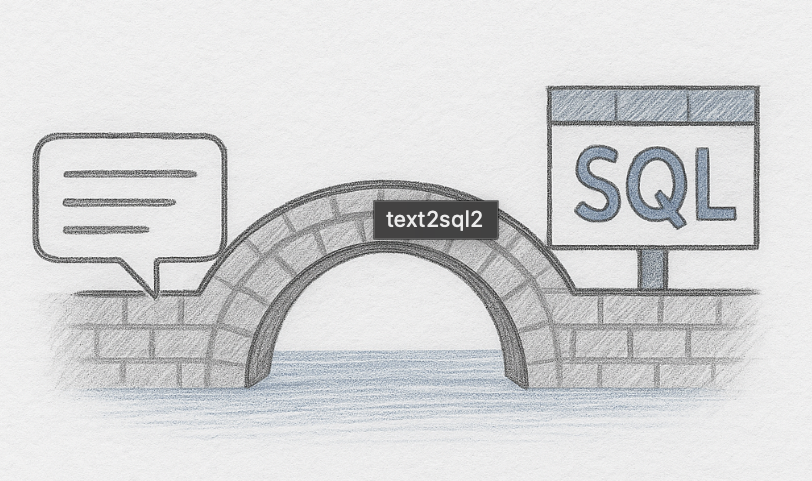
In today’s data-driven world, the ability to extract insights from databases through natural language queries has emerged as a transformative capability. Text-to-SQL systems—models that translate human language questions into structured query language (SQL)—represent one of the most practical applications of natural language processing (NLP) in enterprise environments. These systems promise to democratize data access, allowing non-technical users to interact with databases through intuitive questions rather than complex code.
But how do we know if these systems are actually delivering on their promise? How can we systematically evaluate whether a text-to-SQL model generates not just valid SQL, but optimal, efficient queries that produce accurate results? This was a problem that our teams faced while trying to evaluate the efficacy of text-to-SQL systems. As organizations increasingly depend on AI agents and Agentic systems for critical business decisions, the need for robust evaluation frameworks has never been more pressing.
The Multifaceted Nature of SQL Evaluation
Text-to-SQL evaluation is deceptively complex. Unlike standard NLP tasks where string-based metrics might suffice, evaluating SQL generation requires consideration of multiple dimensions:
- Syntactic Correctness is merely the starting point. A query might be syntactically valid but semantically flawed. Consider “SELECT FROM employees WHERE salary > 100000″ versus “SELECT FROM employees WHERE salary > 10000″—both valid SQL, but with dramatically different business implications.
- Execution Accuracy goes deeper, asking whether the generated SQL produces the same results as the intended query. Two semantically different queries might coincidentally return identical results on a particular dataset, creating a false impression of equivalence.
- Computational Efficiency adds another dimension. In enterprise settings with massive databases, an inefficient query that retrieves millions of records before filtering them can bring systems to a halt, regardless of its correctness.
- Logical Completeness examines whether the SQL query captures all the logical conditions required in the natural language question. Missing a single filter condition could mean the difference between actionable intelligence and misleading information.
Traditional evaluation methods often fall short in addressing these multifaceted concerns. Many existing benchmarks rely primarily on string matching or execution accuracy, neglecting the critical aspects of efficiency and logical completeness. Others use static datasets that fail to represent the diversity of real-world databases and queries.
In production environments, text-to-SQL systems face challenges that laboratory evaluations often miss:
- Databases with hundreds of tables and complex relationships
- Domain-specific terminology and jargon
- Ambiguous natural language questions
- Performance requirements for large-scale data
- Multiple SQL dialects across different database systems
Implementation Approaches for Evaluation Systems
Current text-to-SQL evaluation implementations typically fall into several categories, each with distinct advantages and limitations:
String Matching-Based Evaluation
The most straightforward approach compares generated SQL strings against reference queries. Implementations range from exact matching to various normalization techniques that account for SQL’s flexibility (e.g., column order invariance in SELECT clauses). Libraries like sqlparse and sqlglot are commonly used to standardize queries before comparison.
This approach is simple to implement but struggles with SQL’s expressivity—two semantically equivalent queries can be syntactically different.
Execution-Based Evaluation
A more robust approach executes both the generated and reference queries against a database and compares the results. This method addresses many limitations of string matching but introduces other challenges. It requires a functioning database environment and cannot identify inefficient queries that happen to produce correct results.
Multi-Metric Evaluation with LLM Judges
A more sophisticated evaluation implementation combines multiple metrics into composite scores while leveraging LLM-as-a-judge. While this is a common approach for unstructured data based evaluations, we used this technique to assess semantic equivalence and other qualitative aspects of SQL queries.
The key dimensions evaluated include:
- Validity: Does the query execute without errors?
- Execution accuracy: Do the results match the reference?
- Efficiency: Number and complexity of joins, use of appropriate indexes, filtering strategy (early vs. late filtering), subquery usage, aggregate function efficiency
- Logical correctness: Are all required JOIN conditions present? Are all filtering conditions (WHERE) properly included? Are all grouping and aggregation operations logically equivalent?
A composite score is then calculated with weighted components — typically 15% validity, 45% execution accuracy, 25% efficiency, and 15% logical correctness.
Real-World Performance: Auditing Snowflake Cortex Analyst
To demonstrate this evaluation framework in practice, we conducted a performance audit of Snowflake Cortex Analyst, a popular text-to-SQL system. The evaluation revealed several important insights:
- Strong execution accuracy on simple to moderately complex queries
- Variable performance on queries requiring deep schema understanding
- Efficiency concerns with certain query patterns, particularly those involving multiple joins
- Areas for improvement in handling ambiguous natural language inputs
These findings illustrate why comprehensive evaluation frameworks are essential — single-metric approaches would have missed critical performance variations across different query types and complexity levels.
Building Production-Ready Text-to-SQL Systems
For enterprises looking to deploy text-to-SQL systems in production, several recommendations emerge from this evaluation work:
- Implement multi-dimensional evaluation that goes beyond simple accuracy metrics
- Test with realistic data that reflects production database complexity
- Monitor performance over time as models and data evolve
- Include domain experts in the evaluation process to assess business relevance
- Establish clear performance thresholds for production deployment
The Path Forward
Text-to-SQL systems represent a significant opportunity to democratize data access in enterprises. However, realizing this potential requires rigorous evaluation frameworks that capture the multifaceted nature of SQL generation. By combining traditional metrics with LLM-based evaluation and execution analysis, organizations can build the confidence needed to deploy these systems at scale.
As we continue to refine these evaluation approaches at Trust3 AI, we’re committed to helping enterprises navigate the complexities of AI deployment with frameworks that ensure not just functionality, but optimal performance and reliability in production environments.