Scaling AI with Databricks: Governance as the Foundation

by Ibby Rahmani
Last updated on April 12, 2026
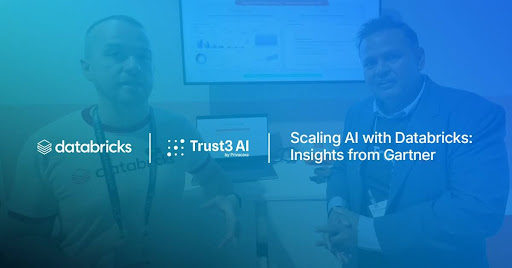
Organizations are rushing to deploy artificial intelligence. Teams want to leverage large language models, build predictive analytics, and automate routine tasks. Yet, many hit a sudden wall when they attempt to scale these initiatives safely. The missing piece of the puzzle is almost always a robust data governance strategy. This post breaks down the core insights from my interaction with Zafer Bilaloglu from Databricks at the Gartner Data and Analytics summit. We discussed the critical differences between data and AI governance and outlined how you can set a secure foundation for your future projects.
Live from the Gartner Data and Analytics Summit
The energy at the Gartner Data and Analytics Summit was electric. Thousands of data professionals gathered to discuss the future of the industry. While previous years focused heavily on data storage or pure machine learning capabilities, this year felt distinctly different. The conversation has matured. People are no longer just asking how to build AI; they are asking how to control it, trust it, and scale it responsibly.
AI Governance took center stage as the overarching theme of the conference. Companies realize that throwing raw data at an algorithm without oversight creates massive organizational risk. This aligns perfectly with Gartner’s ongoing research into artificial intelligence.
Governance goes far beyond simple compliance or basic security checklists. It involves a comprehensive strategy that touches every part of your organization. It ensures that your investments actually yield positive returns without exposing you to reputational damage or operational failure.
The Intersection of Trust and Analytics
During the final day of the summit, I had the opportunity to sit down with Zafer Bilaloglu. Zafer is a highly respected Solutions Architect who brings nearly a decade of dedicated governance experience to the table. For the past six years, he has been with Databricks, helping enterprise customers implement robust data strategies and governance frameworks directly on top of their platforms.
When I asked him what themes were hitting home the hardest with attendees, he confirmed my own observations. AI Governance is absolutely taking off. It serves as the critical layer that allows AI ecosystems to accurately answer complex business questions based on organizational data.
We discussed the concept of trust, a word that gets used frequently but is rarely defined in the context of machine learning. When you build systems that make decisions automatically, trust becomes a tangible metric. You need to know that the outputs are reliable.
Zafer summarized this perfectly during our conversation:
“Being able to trust your data, that it’s accurate, that it can deliver the right answers, especially as agents start performing the work, becomes critical.”
This insight points to a massive shift in how we use technology. We are moving away from passive analytics dashboards and stepping into an era of autonomous AI agents. These agents will eventually execute tasks, send communications, and make operational decisions on our behalf. If you do not have absolute trust in the governance structures guiding those agents, the risk of failure multiplies exponentially.
Data Governance vs. AI Governance: What is the Difference?
A common point of confusion for many teams is the distinction between data governance and AI governance. Many leaders assume that if they have strong data governance, their AI models are automatically secure. This is a dangerous misconception.
While the two disciplines are closely related and deeply interdependent, they manage entirely different lifecycles and risks.
To help clarify this, let us look at a direct comparison between the two concepts.
| Feature | Data Governance | AI Governance |
|---|---|---|
| Core Focus | Data quality, lineage, access control, and privacy. | Model fairness, bias, explainability, ethical use, and agent governance. |
| Asset Lifecycle | From data ingestion and storage to archival and deletion. | From model training and testing to deployment and drift monitoring. |
| Primary Risks | Data breaches, compliance violations (GDPR/CCPA), poor data quality. | Hallucinations, algorithmic bias, automated decision errors, and rogue agents. |
| Key Metrics | Accuracy, completeness, timeliness, and consistency of data. | Precision, recall, model drift, and output transparency. |
| Typical Owners | Chief Data Officers (CDO), Data Stewards, Database Administrators, Data Governance Manager, Data Architect | Chief AI Officers (CAIO), MLOps Engineer, Responsible AI Lead, AI Compliance Auditor |
Understanding the Overlap Between Data Governance vs. AI Governance
As the table illustrates, data governance focuses on the raw materials. It answers questions like: Where did this information come from? Who has permission to view it? Is it accurate and up to date?
AI governance focuses on the application of those materials. It answers questions like: How did the model arrive at this specific conclusion? Is the algorithm favoring one demographic over another? Has the model’s accuracy degraded over time?
You cannot have effective AI governance without a foundation of strong data governance. If your raw data is flawed, biased, or unsecured, your AI models will simply amplify those issues. However, pristine data does not guarantee a safe AI model. You still need specific AI guardrails to monitor how algorithms interpret and act upon that information.
Setting the Foundation for AI Success
As our conversation at the summit concluded, I asked Zafer for one final piece of advice for organizations navigating these complex waters. His response was definitive.
“Data governance is the most critical piece of your AI journey. You have to set that foundation for your AI systems to succeed in this era.”
This is the ultimate takeaway for any leader looking to modernize their technology stack. You cannot build a skyscraper on a foundation of sand. Before you invest heavily in complex neural networks or generative AI applications, you must invest in the underlying governance frameworks.
Setting this foundation requires a shift in organizational culture. Teams must view governance not as a bottleneck, but as a crucial enabler. When developers and data scientists know that the data they are using is secure, compliant, and accurate, they can build and iterate much faster.
How Trust3 AI Empowers Your Strategy
Managing the complexities of both data and artificial intelligence requires specialized tools. Manual oversight and outdated spreadsheets are no longer sufficient to monitor automated agents and rapidly evolving language models.
This is where Trust3 AI delivers immense value. Trust3 AI provides a comprehensive platform designed specifically to bridge the gap between innovation and security.
By implementing Trust3 AI, organizations gain the ability to enforce strict governance policies across their entire AI lifecycle. The platform allows you to continuously monitor your models for drift, track the exact lineage of your training data, and ensure that every algorithmic decision remains transparent and explainable.
Trust3 AI automates the heavy lifting of compliance, allowing your technical teams to focus on building powerful solutions rather than worrying about regulatory blind spots. If you want your organization to succeed in this new technological era, you need an infrastructure built on trust, transparency, and control. With Trust3 AI, you can deploy your most ambitious projects with complete confidence.
Watch the video.
Explore how Trust3 AI helps organizations operationalize AI governance and build trusted data foundations. If you’re ready to move beyond experimentation and into production-scale AI, you can also schedule a demo to see how Trust3 supports secure, enterprise-ready AI deployments.