
AI has officially entered the enterprise era, and Databricks is helping drive that transformation.
At this year’s Data + AI Summit in San Francisco, Databricks introduced a wave of new capabilities focused on one major goal: making AI truly production-ready.
The company unveiled new tools for deploying modular agents, simplifying data workflows, and building next-generation intelligent applications. As a result, Databricks continues to assemble the infrastructure required for scalable, secure, and efficient AI systems.
Major announcements included Agent Bricks, LakeFlow Designer, MLflow 3.0, Lakebase, and governance integrations with Trust3 AI.
Together, these updates represent a turning point for enterprise teams seeking more control, trust, and speed in their AI deployments.
Here is a closer look at the announcements and why they matter.
Agent Bricks: Modularizing the AI Deployment Lifecycle
Agent Bricks, now available in beta, builds on the Mosaic AI Agent Framework and introduces a modular approach to deploying intelligent agents.
Users can describe the task they want an agent to perform, connect relevant data sources, and allow the platform to handle the remaining setup automatically.
For example, Agent Bricks manages infrastructure provisioning, monitoring, governance, and operational workflows behind the scenes.
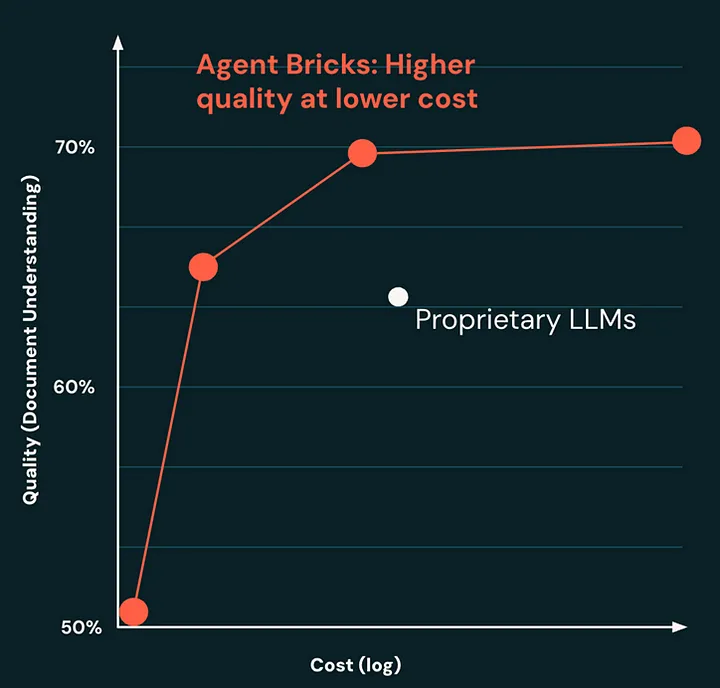
More importantly, Agent Bricks addresses many of the challenges associated with production AI environments.
The platform includes built-in performance evaluation, cost optimization tools, and policy-based governance capabilities.
As a result, enterprise teams can monitor correctness, latency, and business outcomes while also enforcing safety constraints and maintaining transparency around agent behavior.
For organizations building task-specific AI agents such as customer service assistants, compliance systems, or document review tools, Agent Bricks significantly reduces operational complexity.
Consequently, teams can accelerate AI adoption without sacrificing governance or reliability.
LakeFlow Designer: No-Code ETL Comes to the Lakehouse
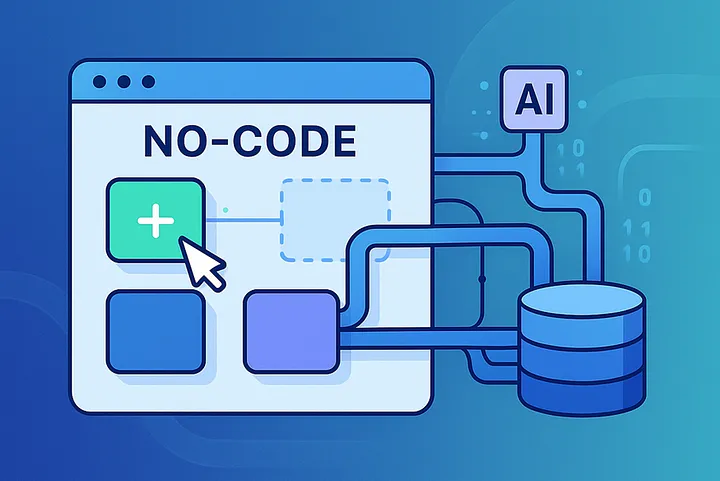
Databricks also introduced LakeFlow Designer, a visual interface for building and scheduling ETL workflows without writing code.
With this capability, analysts, operations teams, and business users can design their own data pipelines through a drag-and-drop experience.
This launch marks a meaningful shift from the engineering-heavy approach Databricks originally targeted.
LakeFlow Designer allows cross-functional teams to combine structured and unstructured data sources, define workflows, and manage pipelines independently.
As a result, organizations can reduce development bottlenecks and enable faster collaboration between technical and business teams.
Furthermore, as enterprises move toward domain-driven data products and decentralized data access, empowering more users to build pipelines safely becomes increasingly important.
MLflow 3.0: Designed for Generative AI
The release of MLflow 3.0 introduces several long-awaited capabilities designed specifically for large language models and generative AI applications.
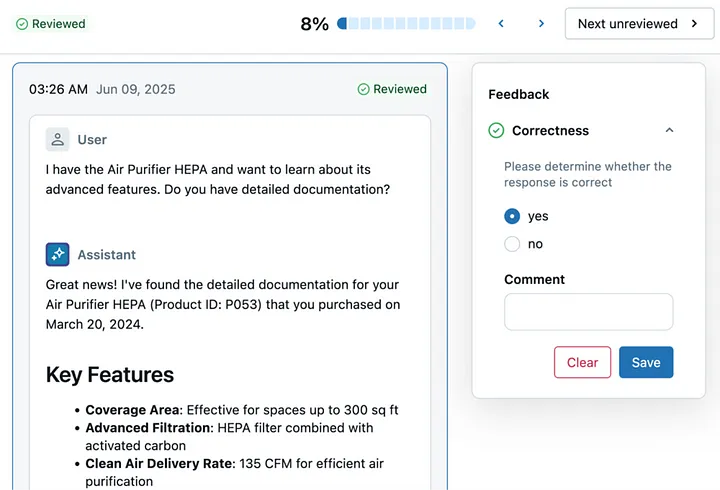
One major feature is prompt versioning, which allows teams to track, compare, and refine prompt engineering workflows more effectively.
Additionally, hierarchical observability provides deeper visibility into complex AI agent flows and multi-step reasoning chains.
Databricks also expanded integration with Unity Catalog and Databricks Workflows.
Consequently, organizations can align model evaluation, deployment pipelines, and governance policies more consistently across enterprise environments.
As AI systems become more dynamic and layered, enterprises need infrastructure that surfaces meaningful operational signals across the stack.
MLflow 3.0 delivers that visibility while also improving lifecycle management, governance, and auditability.
Therefore, it becomes a critical component for enterprises deploying AI at scale.
Lakebase: Operational Databases Meet the Lakehouse
Another major announcement focused on Lakebase, a fully managed Postgres-compatible engine designed for transactional and operational workloads directly within the lakehouse architecture.
Databricks built this offering using technology from its recent acquisition of Neon.
As a result, organizations can now support a new generation of intelligent applications much closer to the underlying data.
Lakebase also helps unify analytical and operational workloads inside a single governed platform.
Historically, enterprises separated transactional systems from analytical pipelines. However, Lakebase removes those boundaries and creates a stronger foundation for real-time AI applications.
Trust3 AI: The Governance Layer for Scalable AI
While Databricks builds the infrastructure for production-grade AI, Trust3 AI delivers the governance and trust layer required to scale these systems responsibly.
Trust3 AI unifies observability, runtime validation, and cross-platform accuracy controls across enterprise AI environments.
Consequently, organizations can deploy advanced AI agents and applications with greater confidence.
Together, Databricks and Trust3 AI create a strong foundation for enterprise AI adoption.
This combination allows enterprises to balance rapid innovation with the governance, compliance, safety, and accountability that production systems require.
Looking Ahead
The announcements at Data + AI Summit 2025 represent a major step forward in the evolution of enterprise AI.
By focusing on production readiness, modular deployment, and governance, Databricks and its ecosystem partners continue removing barriers that previously limited AI adoption in enterprise environments.
For organizations ready to move beyond experimentation, the path toward production-scale AI is becoming much clearer.
With the right infrastructure and governance strategy in place, enterprises can finally scale trustworthy AI systems with confidence.